Beyond Apocalypse (Part 2) – Mystical Revelations and Cycle Science
**
This is the first of two chapters that will be published in short succession. This content contains futurology based on cycle science and the mystical sciences. Contemplative thought on the themes presented is required. Readers are encouraged to approach the text with a critical yet open mind and to conduct their own further study.
**
Introduction
Due to renewed interest in the subject of cycle science, important information covered in a previous work (Navigating the Greatest Shift in 26,000 Years) is concisely presented in some segments in this essay, with additional depth added with regard to some of the important factors.
Cycle Science
The process of analysing historical events with a focus on social phenomena within the context of ancient, metaphysical cycles is a form of lost yet recovering science that could be termed ‘cycle science’. It is a multidisciplinary approach that considers a broad range of factors, as required.
A study of human consciousness and social trends produced or influenced by the ‘atmosphere’ or ‘spirit’ of an age (its zeitgeist) is one aspect of it, while the technical side of cycle science involves a study of the astronomical movements and positioning of celestial phenomena.
Combined with other complementary study areas in the domains of psychology, sociology, anthropology, and archaeology, a holistic type of human science emerges, which places great value on the role of humans as evolving beings on Earth with the aim of deepening that understanding.
Multidimensionality
Recognising the existence of unseen cyclic influences and processes that affect the world brings an awareness of invisible yet real metaphysical and energetic dynamics that play important roles in our perception of reality. Often, clear evidence of Divine Creativity is revealed to dedicated students, making cycle science a spiritual or a holy science (which also relates to an important book, The Holy Science) 1
An awareness of a multidimensional reality governed by numerous turning and shifting cycles impresses upon the learner that linearity is, in fact, a mere illusion, a phenomenon that simply appears as permanency. Consequently, a quantum leap in human consciousness is not necessarily required to arrive at a perception of multidimensionality, as it can be achieved (at least partially) through cycle science.
Mystical Revelations
The answer to the question, “What is Mysticism?” can be summed up in a few comprehensive words, “Mysticism is Scientific Knowledge of Divine Truths.” – Johanna Brandt (The Millennium). 2
The potential for a whole new spectrum of mystic awareness and insight opens to students who become aware of multidimensionality. Through this type of work, an invisible, metaphysical architecture in the cosmos is revealed, and a Divine Presence in the shaping of reality becomes self-evident. Those who engage in cycle science with reverence become susceptible to having direct experiences of elements of the Divine, which encapsulate what mystical encounters are about.
The importance of this factor is associated with the promise of a new era – the era we are presently entering – that brings a return to revelatory mysticism, as revealed to selected mystics and prophets of the past. 2, 3
Mysticism is Harmony between God and man. It is the gift by which the created comes into unmistakable contact with the Creator, the medium of conscious communion, through which the Will of God is revealed to man. – Johanna Brandt (The Millennium). 2
Knowledge that the world is governed by metaphysical cycles constitutes scientific knowledge of Divine truths, 2 because cyclic laws are natural laws, and cycle science provides an entrance into the realm of mysticism as it provides access to unseen, yet Divine and intelligently designed, metaphysical realities.
Mysticism is the art of union with Reality. The mystic is a person who has attained that union in greater or less degree; or who aims at and believes in such attainment. – Evelyn Underhill (Practical Mysticism). 4
Individuals who are intuitively and spiritually inclined and are drawn toward these potentialities are encouraged to explore the themes and topics presented in this essay further (see also referenced materials).
A World as a Cycle
A ‘world’ is a cycle, and a cycle is a ‘sun’. 5, 6 As one sun sets, another rises, and as one world ends, another commences. Every World Cycle has its own reality, which is different from previous or later suns. The sun never sets forever, and the world never ends permanently. Different versions of the world in the form of world cycles emerge in time, one following the other.
The idea of successive ‘worlds’ or ‘suns’ can be found in many indigenous societies of the Americas. The Hopi people of the Southwest envision cycles of emergence that progress in a way so similar to that recorded by the Maya that they are surely of the same essential world view. – Kenneth Johnson (The Mayan Prophecies). 5
Once this timeless pattern is correctly understood, as the ancients did, the purpose of the end-times archetype (identified by CG Jung) 7 becomes evident too. It alerts humans to great change that is upon them, motivating them to anticipate what those changes may be, internally and externally.
In the past it was usually the spiritual masters and wisdom keepers who were able to read the changing energies, symbols, and archetypes correctly and would advise their leaders and teach or guide their communities accordingly, as they were approaching and going through the energy transitions.
The Primary Cycle
A dedicated study of ancient cycles makes it possible to determine when an epoch will end. The ‘reset’ of the precessional cycle has been determined to take place in 2030 8 (see also next chapter for additional details).
The Precession of the Equinoxes Cycle is a primary cycle that affects life on Earth in profound and fundamental ways. It influences human consciousness, and its energies flow through us on a cellular, organic level. We exist within the cycle, and the cycle exists within us.
This cycle among the celestial bodies has its miniature copy in our own bodies. […] In twenty-four hours, we breathe 25,920 times. Our little day has a respiratory round on a similar scale of the sun’s precession movement. Meantime, our heartbeat averages seventy-two times a minute, and the sun takes seventy-two years to pass one degree along its zodiacal round. […] The significant point is the intermingling of active physical and super-physical forces. Through our sympathetic nervous system, the intelligent ‘laws of Nature’ time our organic rhythms with the super-conscious heart of the Universe. – Lydia Ross (The Doctrine of Cycles). 9
Although we are already naturally and organically attuned to the primary cycle, our consciousness is still relatively low and therefore lacking in terms of fully comprehending or appreciating this reality. This is because we are still positioned at the low end of the cycle, but as we gradually proceed along the ascending arc of the Great Year, we are becoming more aware of our attunement with the cosmos.
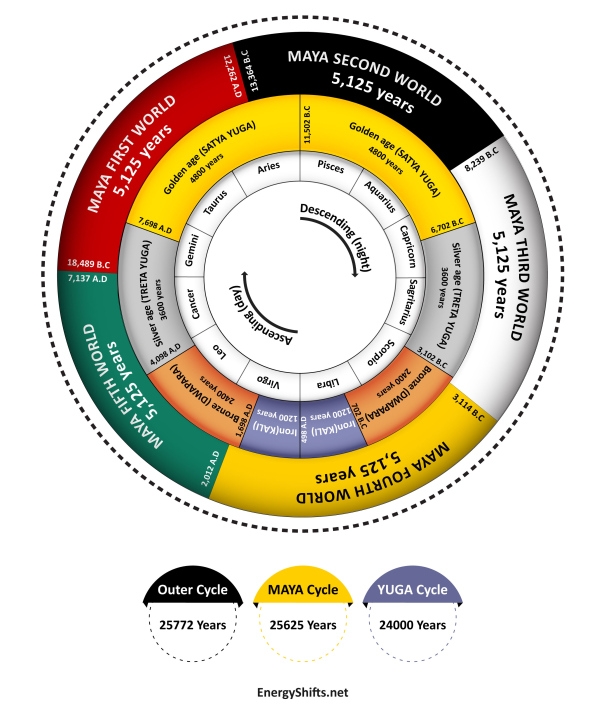
Fig. 1 – Earth’s Great Year: Precessional Cycle (Outer Cycle) with Maya Five Worlds Cycle & Vedic Yuga Great Year
The Precession of the Equinoxes Cycle is also known as Earth’s Great Year, the Platonic Year or Hamlet’s Mill, and its overall length fluctuates between 24,000 and 26,000 years. Presently, its duration is estimated at 25,772 years. In older literature, it was estimated at 25,920 9 or 25,950 years.
As an aside, this grand cycle is generally rounded off to 24,000, 25,000 or 26,000 years, respectively; by writers for simplicity. Essays by this writer generally refer to 26,000 years to include all considerations, with exceptions when needed. (See also The Big Picture View, 8 which explains why the duration of the primary cycle varies).
The Maya and Vedic Yuga calendar systems fit into the precessional cycle, and both are direct or indirect versions of it. On a deeper level, these ancient systems are frameworks of cyclicity that measure the rising, falling, and changeability of consciousness within the context of the Great Year’s energy seasons (the fractals or segments that are measured within the overall cycle).
A World Turned Upside Down
During a metaphysical cycle’s wave-like motion, a peak occurs during its midpoint, and a low point is reached toward its end point when it enters a transition phase (i.e., a liminal phase).
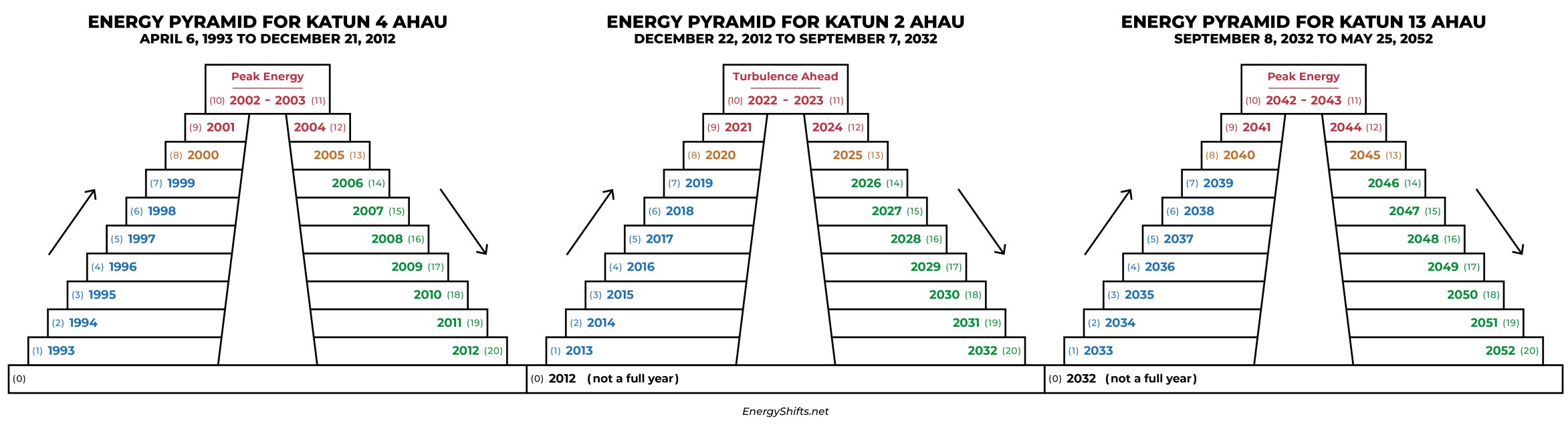
Fig. 2 – Maya Katun Energy Pyramids: Katun 4 Ahau, Katun 2 Ahau & Katun 13 Ahau
When a Maya ‘energy pyramid’ transitions from one energy wave (symbolized by a pyramid) to the next (e.g. between two 19.7-year katun cycles 10 – see Fig. 2) there is an interim low energy period during which there is low energy combined with a confluence of the two cycle’s energies, before the energies of the new cycle grow to become dominant.
The transition and overlap phases would take around 2 to 4 years to complete in the case of katun ages (see also Paradigm Shifts in the Age of Polarity for detailed examples 11). In very large cycles, though, liminal phases can take decades or even millennia to run their course.
Importantly, in the ancients’ mythologies, these transition periods are depicted as underworld phases, and Maya and Hopi wisdom keepers considered them to be times when the world is turned upside down. 5
The Cyclical Reality of Liminality
Liminality is a timeless phenomenon that has been noted many times over, in all sorts of transitions, and it is of special relevance within the context of cycle science. During liminality, structures, frameworks, hierarchies, and statuses that usually determine what is normal for that period are suspended or inverted.
Liminality is a phenomenon that has real-world impacts with regard to humans and societies. It is, however, in many respects metaphysical, especially within large-scale social transitions, as its presence or existence cannot be explained other than by placing it within cyclical frameworks (i.e., within the context of transitions between cycles). This makes liminality an essential and indispensable component of studying cycles.
Liminality has negative and positive aspects. It provides the circumstances and opportunities for personal growth through its challenges, which is, indeed, the purpose of liminal transitions, as understood from perspectives within depth psychology and shamanism. The Hero’s Journey, for example, is a transformative journey through the challenges of liminality, and so is the Maya’s mythic tale of the Hero Twins who transition between world cycles every 5,125 years. 12
Cycles are Spirals
Liminality is therefore a paradoxical state, both at the individual and the societal level. At the level of the individual, it is the destruction of identity, while at the level of society, it involves the suspension of the structure of social order. However, whether in cases of rituals or crises, the aim is to return to conditions of stability and normality. – Bjørn Thomassen (Liminality and the Modern). 13
Liminal periods in the context of cycles are much shorter in duration compared to the cycles themselves (typically 10% of their length). 14 Although liminal phases are not the norm, some people thrive or flourish in them (but not always positively) and would prefer them to the norm, to the extent that they would often artificially simulate or prolong liminality.
On a positive level (as stated), liminal phases could be conducive for positive personal growth. More commonly (in a modern context), it offers escapes from reality and the norm. The downside and danger of liminality is that it can be mistaken for the norm and could lead to getting stuck in the void, resulting in stagnation and going in circles, rather than transitioning out of liminality.
Fortunately, the big picture view is that we have been on the ascending arc of the 24,000 to 26,000-year precessional cycle since 500 AD 1 (see Fig. 4). This means that we will be spiraling upwards for about 10,000 more years. Our present position in the cycle, which is still very low, should underline the importance of spiritual evolution on a personal level within the context of liminality.
A Temporary Devolution
Cyclically, after liminality runs its course, normative structures will return in elevated forms. The devolutionary dip, which happens during a liminal phase, is a cyclical necessity (structurally), but it is a temporary phenomenon that clears the way for evolved phenomena to follow in its wake and aftermath of the collapse of the old cycle’s corrupted structures and norms.
Although many things are presently collapsing, as can be clearly observed, it does not mean that all internal structures are collapsing within all people, everywhere. When the rot of non-structure deepens sufficiently during liminality, temporary and new islands of structure form naturally (externally). These “islands” are usually autonomous individuals (at first).
People seeking structure anew are naturally drawn to each other when things disintegrate sufficiently, and those seeking chaos tend to coalesce as well. A schism occurs, and the seekers of new structures and harmonies would become candidates for ascending out of liminality into new, improved, and evolved structures, which they would establish for new stability.
Liminality and the Tower of Babel
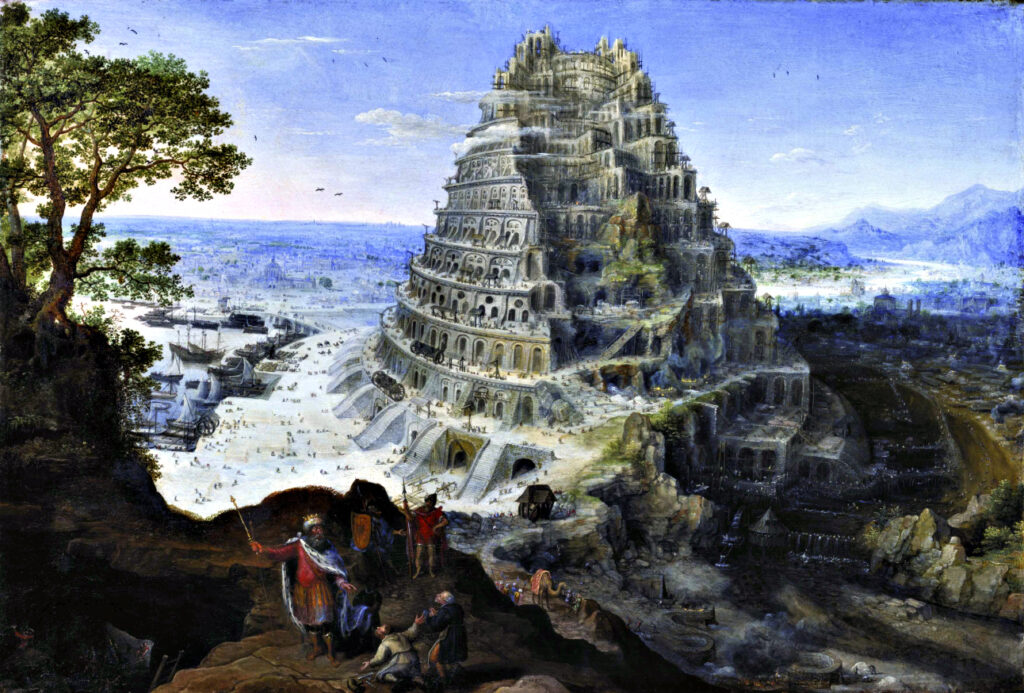
Fig. 3 – The Tower of Babel (1595) – Painting by Lucas van Valckenborch (1535–1597)
(Lucas van Valckenborch, Public domain, via Wikimedia Commons)
These essays are written primarily for a Western audience and from a Western perspective. The Tower of Babel analogy assists in this endeavor as it is contextually relevant with regard to post-modernity and the decline of the West. It serves as an analogy to illustrate some of our contemporary upside down, liminal, underworld realities.
The Judeo-Christian myth encapsulates the origins, history, identity, and storylines of the Western worldview in general. Consequently, the story of the Tower of Babel, similar to the Great Flood, is a storyline inherently comprehended in Western culture and is an important metaphor, even though the West has become very secular in recent decades.
The Inverted Tower and The Ascent
A ‘Tower of Babel’ scenario that arises during liminality constitutes an inverted tower. An ascent from it is required so that right-side-up structures are raised in the upper world of the new cycle. As the new era commences, the world has to be brought back into balance by fostering and facilitating new harmony within new structures.
The complicated part is that the previous cycle’s realities and those of the transition period will not be returning in the same ways or forms in the new cycle (if at all), because the old cycle is coming to an end, while the new cycle’s dynamics and principles are still largely unknown and have not yet formed.
However, to reiterate a point, the reality is that many people are comfortable within the Modern Tower of Babel and would not recognise it for what it is. The atmosphere of the underworld (a place of illusion and delusions) makes it appear ‘normal and enduring’. There are, however, people who strongly intuit and know that something is drastically wrong with the world on a fundamental plane.
Road Maps Out of the Underworld
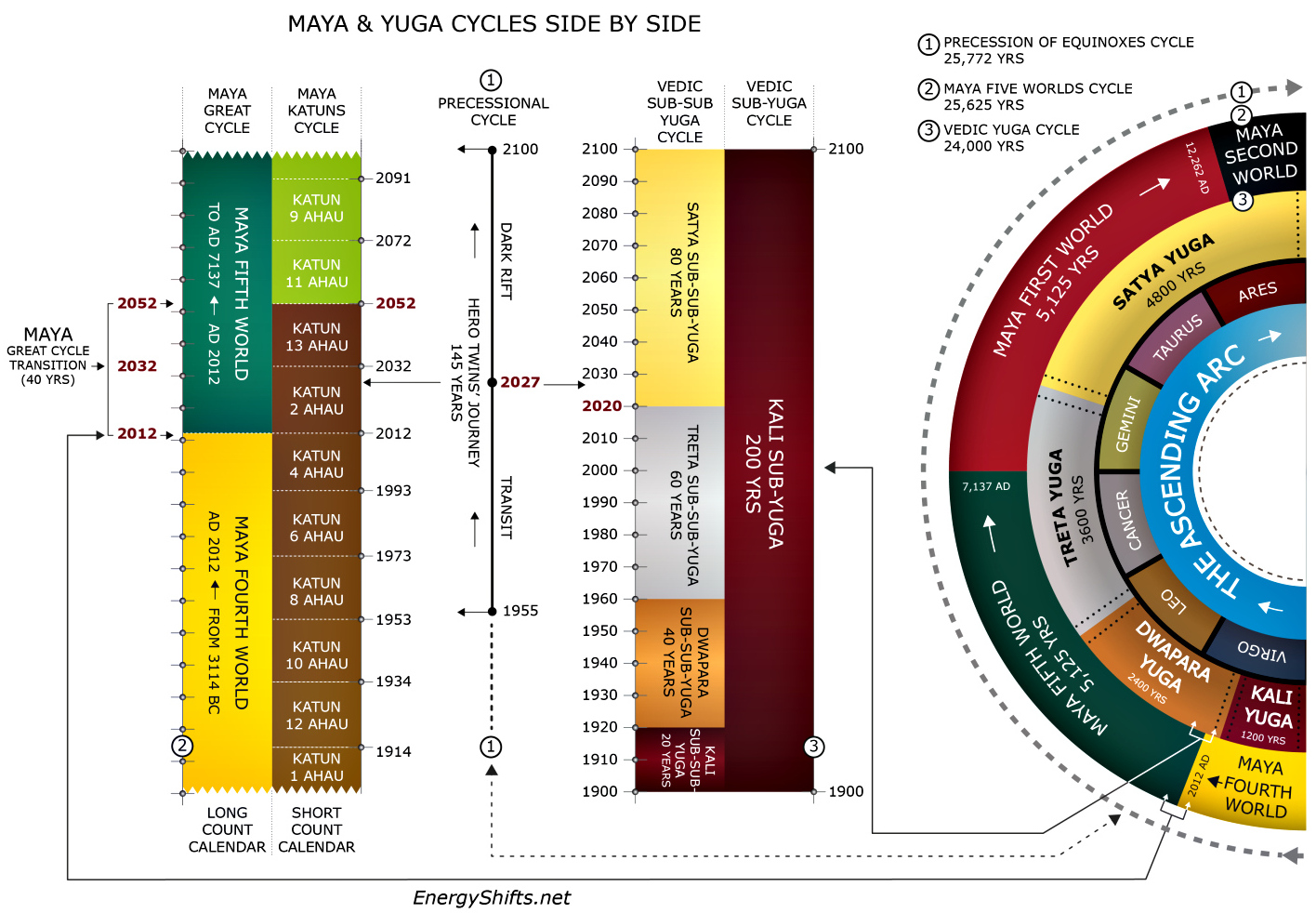
Fig. 4 – Grand View: Precessional Cycle with Maya and Yuga Cycles Side by Side – Detailed
As a spiritual science, cycle science provides knowledge of ancient metaphysical cyclic timelines within frameworks that were measured and defined over thousands of years by civilizations that were at higher stages of spiritual development than ours. These energy map timelines can assist in ascending from the valleys of shadows toward new mountains of light.
A visualization of cyclical energy seasons can assist in clearly pinpointing where we are, where we have come from, and where we are heading. In this way, direction is provided that would otherwise not have been available, considering that most people are unaware of metaphysical cycles and shifts that govern the world.
It is during their journeys of transformation out of the underworld that many pathfinders become seed carriers of the new World. Some would evolve into conscious co-creators 15 in service of the Divine as they align themselves in advance with the natural, directional energy flows of the post-transition new World.
Liminality’s Deeper Dynamics
A comprehensive study of liminality reveals that many dynamics are at play at different stages. According to leading anthropologists and sociologists, large-scale liminality (as opposed to small-scale, controlled liminality such as during traditional rites of passage), typically features some of the phenomena summarized below, while some of these are also present in small-scale liminality, considering that the esoteric principle of the microcosm reflecting the macrocosm applies.
The key difference between small and large-scale liminality is that large-scale liminality is much more dangerous 13 and chaotic, with uncertain timelines, whereas small-scale liminality is more contained and controlled, with specific entrance and exit points. 13
Readers are invited to contemplate how the phenomena listed (below) might relate to the analogy of the Modern Tower of Babel, and whether some of these phenomena have been present in their societies in recent years, or are presently active.
There is broad-scale convergence; integration is championed, hybridization results 16; ignorance about limits or limitations abound 13 (e.g., open borders are championed); boundaries collapse 17; a leveling happens 18 (e.g., everyone becomes just a number); homogenization of status unfolds 18; a sense of collective community is experienced (e.g., “we are all in this together”) known as ‘communitas’ 18; ‘centralization of liminality’ occurs 13 (e.g., centralization features everywhere); ambivalence and ambiguity prevails 13.
Collective ‘morality’ replaces individual morals 19-21, (e.g., value system dissolves, a-morality results), untruth rules the crowd 19; (i.e., “the masses don’t think”); utopian ideals are championed 18 (ideologically).
A sense of senselessness prevails; boredom and ‘normative nihilism’ 13 are common; infiniteness is sensed or experienced 22; a void-like situation develops 13; identities are lost 13, 18 (and identity politics compensate 23); examples of ‘anti-structure’ can be observed 18, 24 (e.g., institutional structures are strongly rallied against and there are attempts to dismantle them or overhaul them).
Paradox is rife 18 (e.g., double standards are ubiquitous), hierarchies are turned upside down 18; inversions and status reversals are regular 18; imitation is rife 25 (copycat behavior flourishes); mimetic rivalry, mimetic spirals and mimetic contagions flare up 26, 27, 28 (see also previous chapter); scapegoating increases 29; mimetic violence and inhumaneness are more evident 26, 27; separations develop 13; schisms occur 30 (societies become divided); authoritarianism and dictatorships arise. 31
Crisis becomes contagious 30 (“everything is in crisis”, e.g., a ‘polycrisis’ or a ‘metacrisis’ is perceived or invoked) 32; tricksters enter the scene and create rivalries, steering circumstances for their own self-interest 13 (e.g., ready-made solutions are offered for created crises, such as; enemies, dangers and scapegoats); opportunists take charge and prolong liminality since they thrive in it. 31
Although the macrocosm of large-scale cyclical liminality can generally not be avoided (because it is cyclic), it can be transcended in the microcosm (on a personal level), in various ways.
Sense-making, Self-guidance and Rites of Passage
In the case of real-world liminality, the previously taken-for-granted order of things has actually collapsed. It cannot, therefore, simply be restored. This means that the central task in a real-world large-scale liminal situation is an actual search for order, with all the existential anxiety this entails – Arpad Szakolczai (Reflexive Historical Sociology). 31
Being able to make sense of the world during a time of extreme chaos can bring inner stability. It can reduce personal confusion and anxiety. When having a strategy for sense-making (through cycle science, for example), reference points and route maps are available, from which transition pathways can be outlined. From within these outlines, better decision-making going forward becomes possible (see also the next chapter).
Until a new culture and new society are thoroughly established, there is no prospect of the cessation of anarchy, of a stable order, or of a streamlined progress. No amount of experimentation with political, economic, or any other factors can eradicate the disease so long as it is carried on in the framework of a transitional period. – Pitirim A. Sorokin (The Crisis of Our Age). 3
Seeking to create order within disorder and creating structure within non-structure for orderliness and stability until some form of normalcy is established once more is an essential practice during the liminal, transition period. It results in self-created inner stability and produces islands of tranquility within individuals, families, and small communities.
If rites of passage contain a chaotic, void-like liminal stage, then there must be something or somebody standing outside this void to guide people out of it. In anthropology, this figure is called the master of ceremonies. But what happens in liminal situations when there is no designated master of ceremonies? – Bjorn Thomassen (Liminality and the Modern). 13
Not getting stuck in liminality is vital. We need to lead ourselves out of liminality because in large-scale liminality, there are no masters of ceremony to provide guidance, whereas in small-scale, controlled liminality, experienced shamans or elders guide participants through the processes. 13
Transforming the World One Person at a Time
The Hero’s Journey is traditionally understood as a deeply personal, inner journey, which results in personal transformations that would transform the outside world “one person at a time”, which is where the integrity within the journey resides. Traditionally, it is not a collective action.
Although it is a solo journey that requires courage and tenacity, it is not an entirely unaccompanied journey. Helpers appear along the way, meaning that organic support emerges naturally during a Hero’s Journey, which is a theme clearly depicted in ancient mythologies (and also in the Maya’s Hero Twins myth). 9 Many people would attest to it being the case for them, too, during the personal transitions they underwent.
If a significant number of people engage in the Hero’s Journey within the context of navigating out of the underworld into a new World Cycle, it becomes an organic, non-collective effort which nonetheless has positive consequences for the new collective (as it forms), since symbolically the old collective stays behind in the underworld as far as consciousness is concerned. The journey-makers out of the underworld become the way-showers for those who would follow.
The interesting part about finding ourselves in this incredibly rare transition period is that we are in the unique positions of ‘being birthed’ while we are the ‘midwives’ of the birthing processes at the same time. In that sense, we are the ones we have been waiting for. (Continued in Part 3 – due next week).
By J.J. Montagnier
Completed: March 1, 2026
Published: March 15, 2026
JJ Montagnier is an independent researcher and writer based in the Southern Hemisphere, at a midpoint between West and East. The views and opinions expressed are those of the writer. This content is provided for educational objectives as a public service and is not for commercial use.
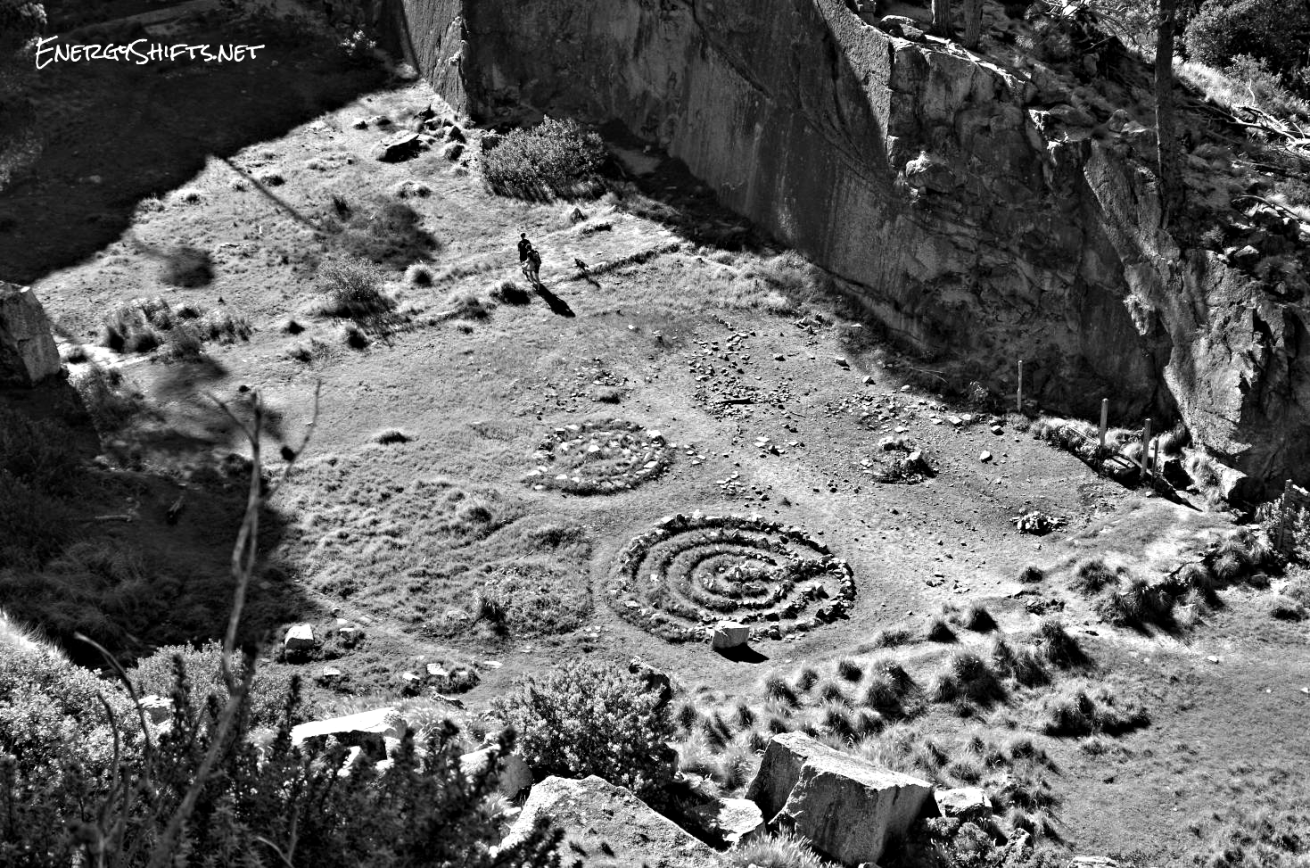
Cover photo: View from above of an abandoned quarry in Table Mountain used for rock climbing, dog walks, picnics and contemplative thought (for those who have discovered it). Picture taken by the writer in the winter of 2025, Cape Town, South Africa.
Please note that using selected quotes and citations does not imply that the writer supports the entire worldviews of the persons cited or the conclusions contained in the referenced materials. The approach is to identify valuable pieces of information and isolate important facts for independent analysis which serve the discussion at hand for critical thought, fresh perspectives and a unique understanding of unfolding events. Readers are encouraged to come to their own conclusions on the information presented.
Copyright 2026 © All Rights Reserved. EnergyShifts.net
References:
References for further reading are a necessary complementary feature due to essays having limited scope and are carefully selected with the reader in mind.
1. Yukteswar S. The holy science. Los Angeles, California: Self-Realization Fellowship; 1977.
2. Brandt J. The millennium. Harmony, Pretoria: Johanna Brandt [self-published]; 1918.
3. Sorokin PA. The crisis of our age. London, England: Oneworld Publications; 1992.
4. Underhill E. Practical mysticism. New York: E. P. Dutton & Company; 1915.
5. Johnson K. The Mayan prophecies. Taos, New Mexico: Mystical Jaguar Productions; 2012.
6. Sullivan W. Secret of the Incas. New York, NY: Crown Publications; 1997.
7. Jung CG. Aion: Researches into the phenomenology of the self. Princeton, N.J.: Bollingen; 1968.
8. Montagnier JJ. Navigating the Greatest Shift in 26,000 Years [Internet]. Montagu, RSA: Mountain Path Productions; 2022. Available: https://archive.org/details/navigating-the-greatest-shift-in-26000-years
9. Ross L. The doctrine of cycles: Theosophical manual. Covina, California: Theosophical University Press; 1944.
10. Montagnier JJ. The Rise and Fall of Polarization [Internet]. Energy Shifts. 2021 [cited 2026 Mar 1]. Available from: https://energyshifts.net/rise-and-fall-of-polarization-2012-to-2032/
11. Montagnier JJ. Paradigm Shifts in the Age of Polarity [Internet]. Energy Shifts. 2018 [cited 2026 Mar 1]. Available from: https://energyshifts.net/paradigm-shifts-in-the-age-of-polarity/
12. Tedlock D. Popol vuh: The definitive edition of the Mayan book of the dawn of life and the glories of gods and kings. London, England: Simon & Schuster; 1996.
13. Thomassen B. Liminality and the modern. Ashgate Publishing; 2014.
14. Shastri V. Keys to the yugas or cycles of the ages: Subyugas in the Sri Yukteswar yuga cycle [Internet]. American Institute of Vedic Studies. 2017 [cited 2026 Mar 1]. Available from: https://www.vedanet.com/keys-to-the-yugas-or-cycles-of-the-ages-subyugas-in-the-sri-yukteswar-yuga-cycle/
15. Montagnier J-J. The Keys to Conscious Co-Creation [Internet]. Gypsycafe.org. Gypsy Café; 2019 [cited 2026 Mar 1]. Available from: https://archive.org/details/the-keys-to-conscious-co-creation-j.-j.-montagnier
16. Bhabha HK. The location of culture. 2nd ed. London and New York: Routledge, 1994.
17. Van Gennep A. The rites of passage. London, England: Routledge, 2004.
18. Turner V. The ritual process: Structure and anti-structure. Harlow, England: Penguin Books; 1974.
19. Kierkegaard S. Point of view for my work as an author. New York, NY: Harper & Row; 1962.
20. Le Bon G. The crowd: A study of the popular mind. Dover Publications, Mineola, 2002.
21. Jung CG. Essays on contemporary events: The psychology of Nazism. Princeton, NJ: Princeton University Press; 1989.
22. Durkheim E. Moral education. New York: The Free Press; 1973.
23. Montagnier JJ. Unity in diversity vs. Disunity in ideologies – post apartheid, South Africa as a case study for multiculturalism. 2018 [cited 2026 Mar 1]. Available from: https://archive.org/details/unity-in-diversity-vs-disunity-in-ideologies-post-apartheid-south-africa-as-a-case-study
24. Turner V. Dramas, fields, and metaphors: Symbolic action in human society. Ithaca, NY: Cornell University Press; 1974.
25. Tarde G. The laws of imitation. New York, NY: Henry Holt & Company; 1903.
26. Girard R. Violence and the sacred. Baltimore, MD: Johns Hopkins University Press; 1979.
27. Girard R. I See Satan Fall Like Lightning. Maryknoll, NY: Orbis Books; 1999.
28. Girard R. Battling to the end: Conversations with Benoit Chantre. East Lansing, MI: Michigan State University Press; 2010.
29. Girard R. The scapegoat. Baltimore, MD: Johns Hopkins University Press; 1989.
30. Turner V. The anthropology of performance. Baltimore, MD: Performing Arts Journals; 1989.
31. Szakolczai A. Reflexive Historical Sociology. London, England: Routledge, 2009.
32. Montagnier JJ. A Crisis in Thinking and a Way-Out [Internet]. Energy Shifts. 2023 [cited 2026, March 1]. Available from: https://energyshifts.net/a-crisis-in-thinking-and-the-way-out/

Discover more from Energy Shifts
Subscribe to get the latest posts sent to your email.